
Third Grade Celebrates by Bringing Historic Trades Back to Life
In late January, our third-grade students presented this year’s school celebration with a focus on traditional trades; an experiential, cross-curricular experience that brought children closer to Greece’s folk heritage, while also nurturing collaboration, self-expression, and respect for everyone’s work.
For the third year in a row, the third-grade celebration served as an open “bridge” to elements of our folk tradition. This time, the children’s journey took them through occupations from another era—trades that supported everyday life and the local economy nearly 100 years ago, reflecting a very different way of living.

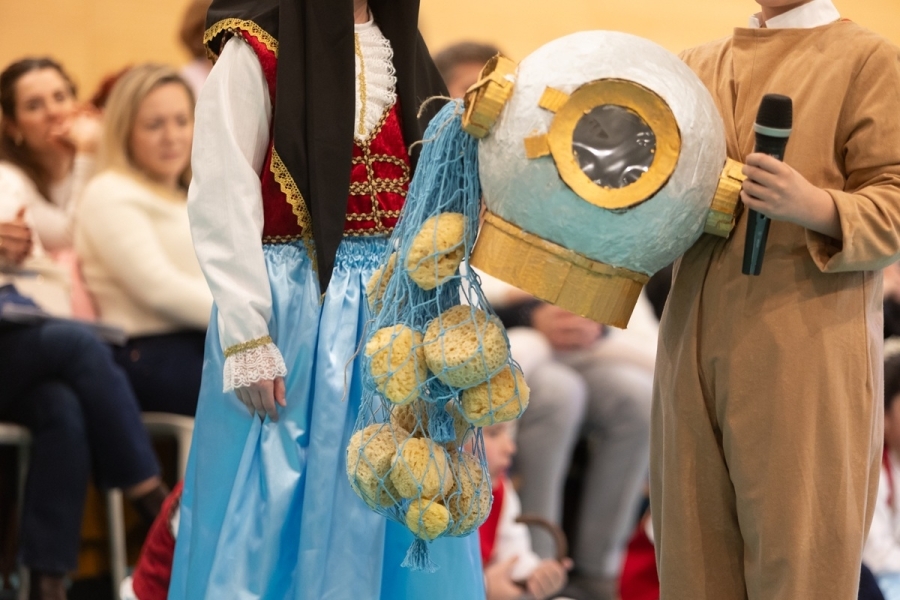
On stage, the Tailor, the Milkman, the Shoeshiner, the Sponge Diver, the Street Musician with the barrel organ, and the Karagiozis puppeteer came “to life” through traditional dances, songs, short performances, and storytelling. Each class presented two trades and danced traditional dances, in a celebration that blended movement, rhythm, and creativity.


Before rehearsing the dances and performances, the children had the opportunity to discuss what society was like in earlier times: how people lived, the conditions they worked under, and the difficulties they faced. They were also encouraged to talk with their grandparents, look for stories and images from their family environment, and return to class with questions, words, and short narratives that brought even more “life” to the theme.
Preparing for, and presenting, the celebration became a cross-curricular learning experience:
-
In Physical Education, students developed motor skills, rhythm, coordination, teamwork, and stage presence.
-
In Music, they practiced traditional rhythms and songs and were introduced to the sounds of Greek traditional music.
-
In Language, they practiced speaking skills, enriched their vocabulary, and developed description and storytelling abilities through writing texts and preparing the celebration’s speeches.
Above all, the project highlighted the value of historical awareness, respect for every form of work, and an appreciation of our folk tradition—in a way that captured children’s interest and filled them with joy and excitement.
The greatest success of the celebration was that even though the students do not have direct personal experience of these trades, they took part with enthusiasm, creativity, and a genuine desire to understand “what it was like back then.” And that is always the most wonderful outcome: when learning becomes an experience that stays with you.
